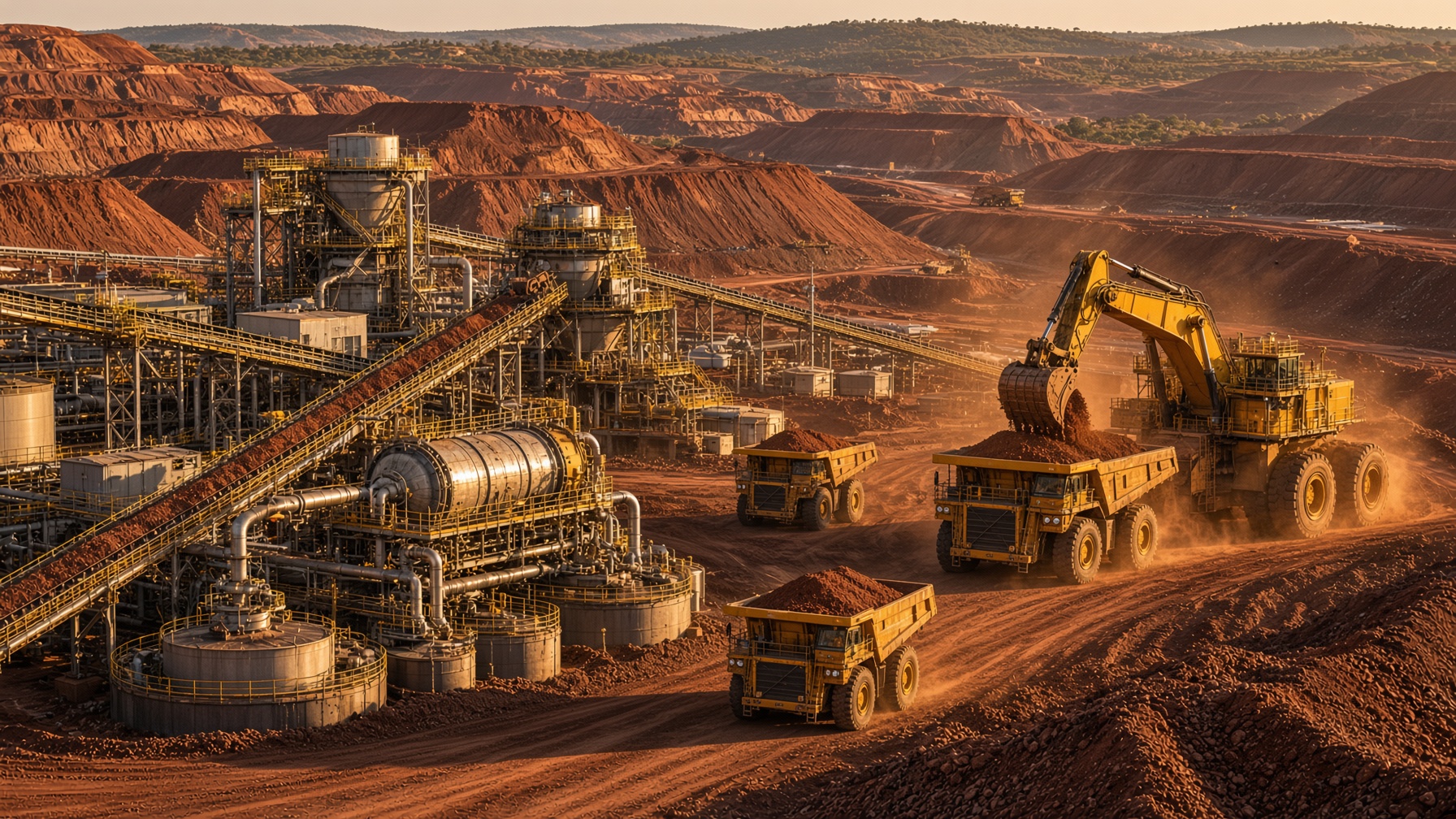
The Global Bauxite Market Context
Bauxite, the principal ore of alumina, serves as the foundational feed stock for aluminium production worldwide. The global market is characterised by significant concentration among a few major producing nations, with Australia, Brazil, Guinea, and India dominating output volumes. However, the economics of bauxite trade have undergone a profound transformation over recent decades, reshaping how nations approach their resources and integrate into global supply chains.
For Africa, which hosts some of the world's largest bauxite reserves—including the massive Iron-belt deposits in Ghana and the vast lateritic sands across Zambia, Tanzania, and Mozambique—the strategic calculus of whether to export crude ore or invest in refining capacity has become a defining challenge for regional development policy.
The traditional export model offers immediate liquidity but constrains long-term value creation.
When countries like Nigeria, Kenya, or Nigeria export raw bauxite to processing hubs such as India, China, and Malaysia, they receive commodity prices based on the spot market without capturing downstream margins. The value chain extends beyond the mine gate: alumina refineries perform energy-intensive processes including calcination, digestion, and purification, transforming bauxite into alumina which commands premium pricing due to its purity and consistency. These refining facilities also generate substantial employment opportunities, local industrial expertise, and tax revenues that can anchor broader economic transformation. The choice between raw-oil export and refinery investment therefore represents more than a business decision—it is a structural decision about whether a nation participates as a supplier of commodities or builds an industrial platform capable of commanding higher-value exports.
The Raw Ore Export Model
The conventional bauxite export strategy centres on delivering unprocessed ore to integrated producer economies. Proponents argue that this approach delivers rapid cash flow and minimises capital expenditure at the outset, allowing resource-rich nations to fund infrastructure, social programs, and foreign exchange stabilisation through timely remittances. By leveraging favourable terms of trade and accessing preferential market access agreements, African exporters often secure low-cost entry into key buyer markets where purchasing power exceeds the cost of importing processed goods. This model aligns well with governments focused on immediate fiscal consolidation and debt reduction, as export proceeds can be rapidly mobilised rather than invested in complex processing infrastructure requiring long payback periods.
However, the raw export model carries inherent limitations that increasingly prove problematic in an era of escalating geopolitical competition and rising consumer demand for high-quality materials.
Aluminium manufacturing, particularly in emerging economies, demands alumina meeting stringent specifications for conductivity, corrosion resistance, and environmental compliance. Many Chinese state-owned enterprises pursuing domestic aluminium targets rely on imported bauxite from countries with established refining capacity—such as Indonesia, Brazil, and Australia—to ensure consistent input quality and traceable sourcing. Without that upstream refining capability, manufacturers face constraints that limit production scalability and increase operational costs. The result is a paradox:
Exporters who prioritise quick revenue generation may inadvertently weaken their own long-term competitiveness by supplying inferior-grade inputs that attract criticism and regulatory scrutiny.
Moreover, the volatility embedded in primary commodity markets presents risks that raw-export strategies cannot fully mitigate. Commodity price cycles span several years, creating boom-and-bust patterns that strain public finances during downturns while generating windfall profits unavailable during peaks. Countries dependent solely on bauxite exports must navigate these fluctuations with limited hedging tools, whereas refineries benefit from upward price movements in both alumina and finished aluminium, smoothing revenue streams across better-defined contracts tied to long-term purchase agreements. The refining sector, anchored in energy-intensive processes that account for roughly two-thirds of total operating costs, requires stable pricing environments to achieve economic viability—a condition that raw-exporter policies rarely guarantee.